Selected Projects
A curated subset of my work that fully or partially involves computational methods and ML/AI.
-
Developing Production ready GPT-2 Text Classifier From Scratch
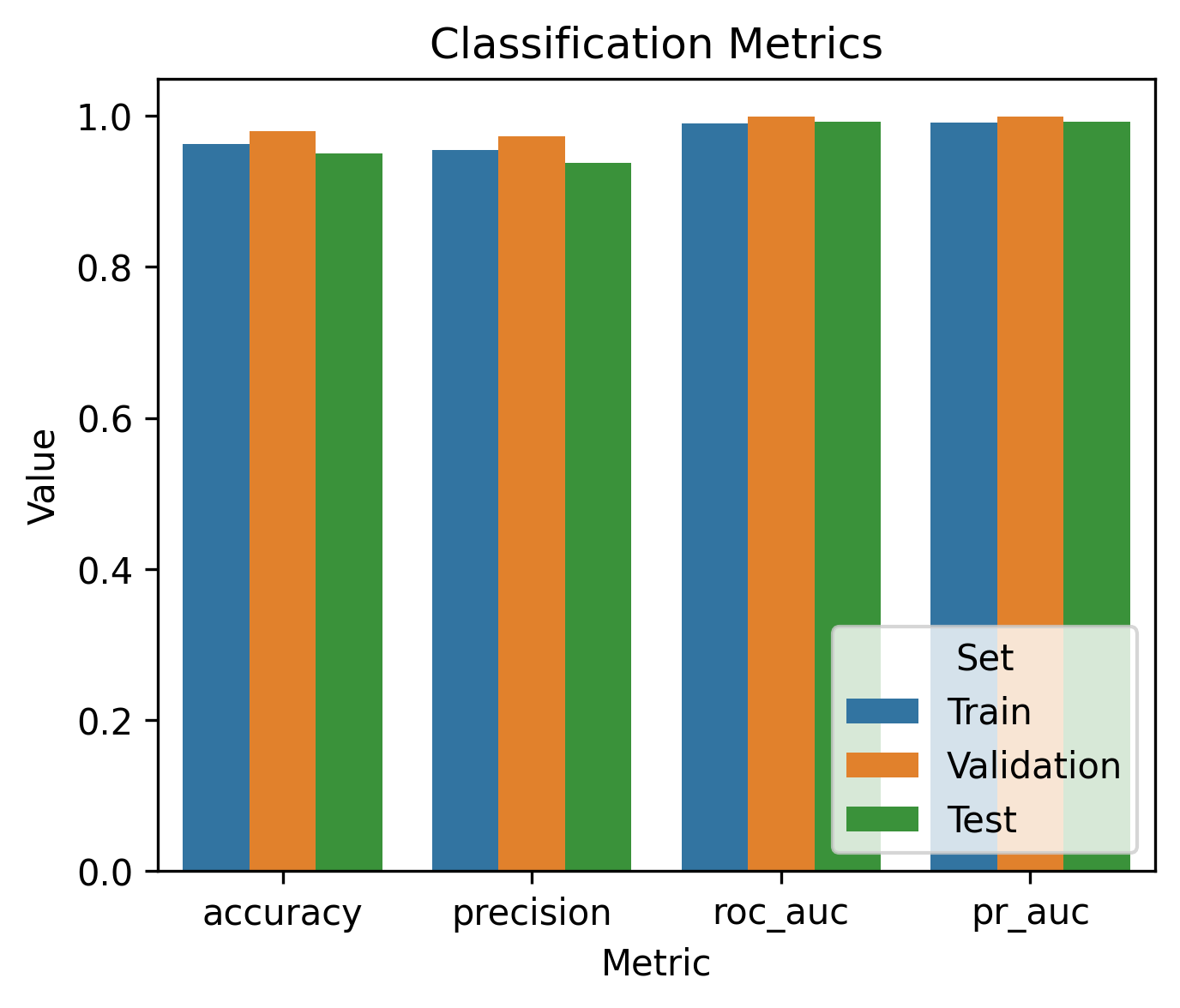
A GPT-2 architecture built from scratch and fine-tuned for text classification, inspired by Sebastian Raschka's Build a Large Language Model (From Scratch) book. The platform is designed around a decoupled, configuration-driven data pipeline that ingests any local or remote two-column dataset (text, label) without code modification, letting students and practitioners iteratively build and test different GPT-2 architectures. It also includes a complete suite of evaluation metrics and optional Distributed Data Parallel (DDP) support for scaling training seamlessly across multiple GPUs or nodes, and an optional flag for real-time model evaluation using WandB API.
-
Deep Learning for Protein Function Prediction
A deep learning platform that predicts protein function directly from amino acid sequence, using the CAFA (Critical Assessment of Functional Annotation) dataset for data preparation, training, and evaluation. Since individual proteins commonly participate in multiple physiological roles concurrently, the task is framed as multi-label classification, predicting functional associations for human proteins across 291 distinct Gene Ontology Molecular Function categories. The platform lets users flexibly derive protein embeddings from pretrained ESM-2 transformers and feed these rich sequence representations into a neural network classifier. It is designed to be modular and extensible, allowing users to easily swap in different model architectures, loss functions, and evaluation metrics for experimentation.
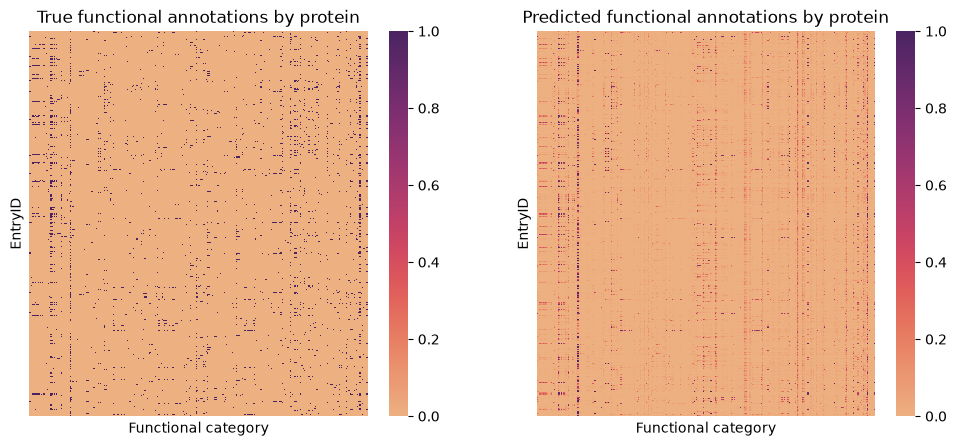
High level visualization of model prediction performance across validation set. -
BioCanvas: A GUI for Multi-Modality Biological Experiment Data Analysis
A comprehensive GUI for processing, consolidating, analyzing, and visualizing multi-modality biological experiment data, including fermentation, bioanalytical, biochemistry, and mass spectrometry process results from selected projects. Its modular design allows users to easily add new data types and analysis workflows, and new projects without modifying the core codebase. BioCanvas runs as an ipywidgets-based Jupyter notebook application, pulling raw experiment files from a local SQLite-backed store and turning them into consolidated tables, statistics with hypothesis testing, and plots via built-in statistical workflows, with no external services required. Synthetic data can also be generated for testing and demonstration purposes, and the entire platform is containerized for easy deployment and reproducibility.
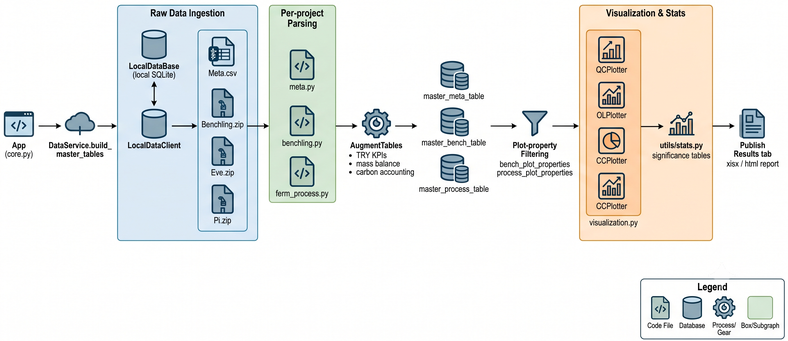
High level data pipeline and visualization workflow. -
Lung Cancer Bulk RNA-Seq Data Analysis Pipeline
An end-to-end computational biology pipeline for analyzing bulk RNA-sequencing data from the Cancer Cell Line Encyclopedia (CCLE), guiding users from raw count matrix processing and unsupervised exploratory analysis (PCA, hierarchical clustering) through differential expression modeling and downstream functional pathway enrichment. The core logic is implemented in Python, with a supplementary R workflow provided for cross-platform comparison.
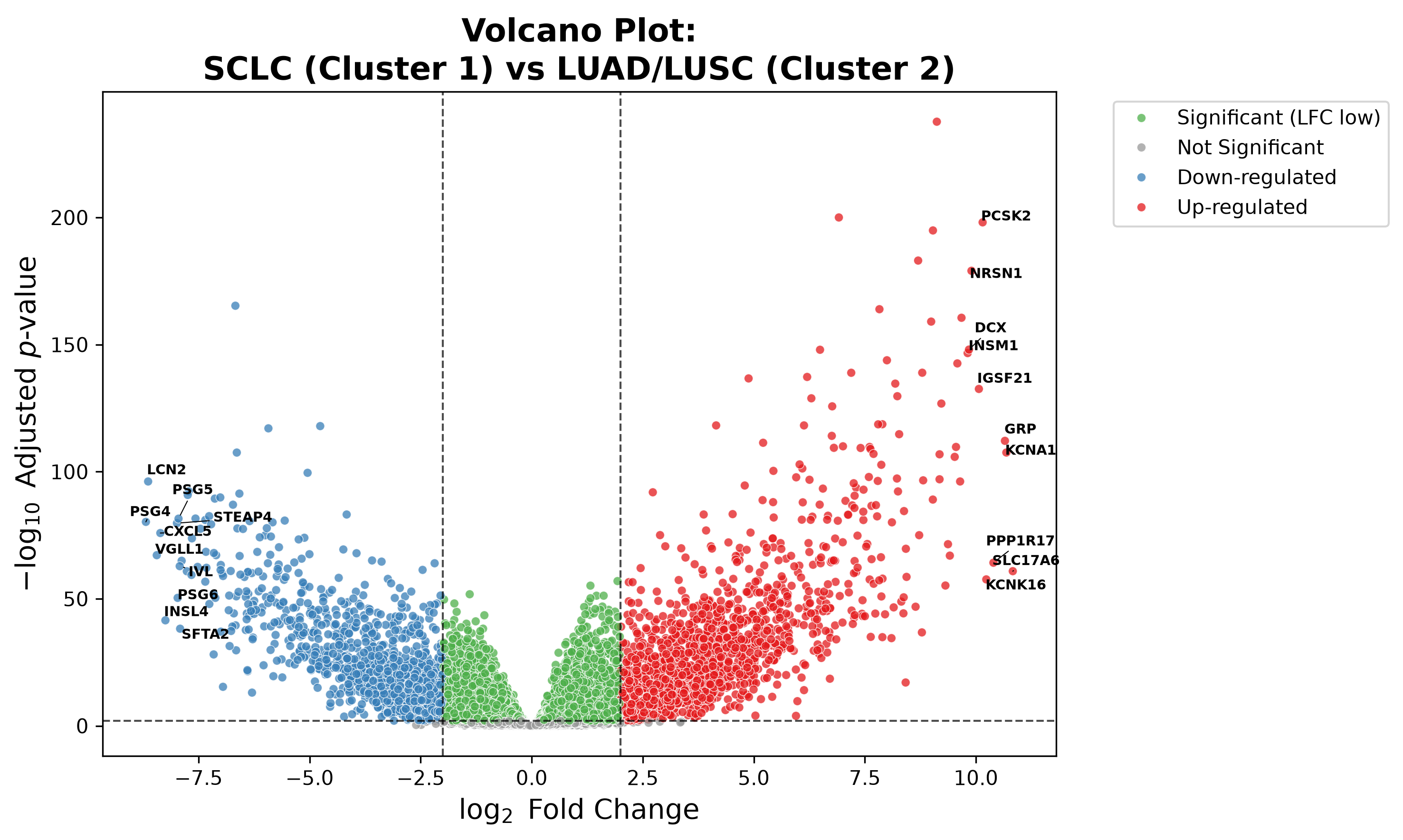
Volcano plot of differentially expressed genes between lung cancer cell lines. -
The Unconventional DNA Sensing in Bacteria
We discovered that the bacterium Bacillus subtilis performs chemotaxis to DNA via one of its principal chemoreceptors. While DNA can serve as a nutrient for B. subtilis, our data suggested that this response is not to the DNA itself but to information encoded within it: B. subtilis prefers the DNA of more closely related species over that of more distantly related ones, suggesting the cells respond to particular sequences enriched in the genomes of related bacteria. We used SELEX-seq to identify the specific DNA motifs the receptor binds to, then evaluated their binding properties using isothermal titration calorimetry (ITC) and an in vitro receptor-kinase assay. The chemotaxis response is dose-dependent and occurs toward both chromosomal and synthetic DNA, though with higher variance in the latter case, which is the main reason this work remains unpublished and its biological explanation is still under investigation. Chemotaxis is strongest toward sequences enriched in these motifs, whose abundance across genomes partially explains the organismal preference for DNA chemotaxis.
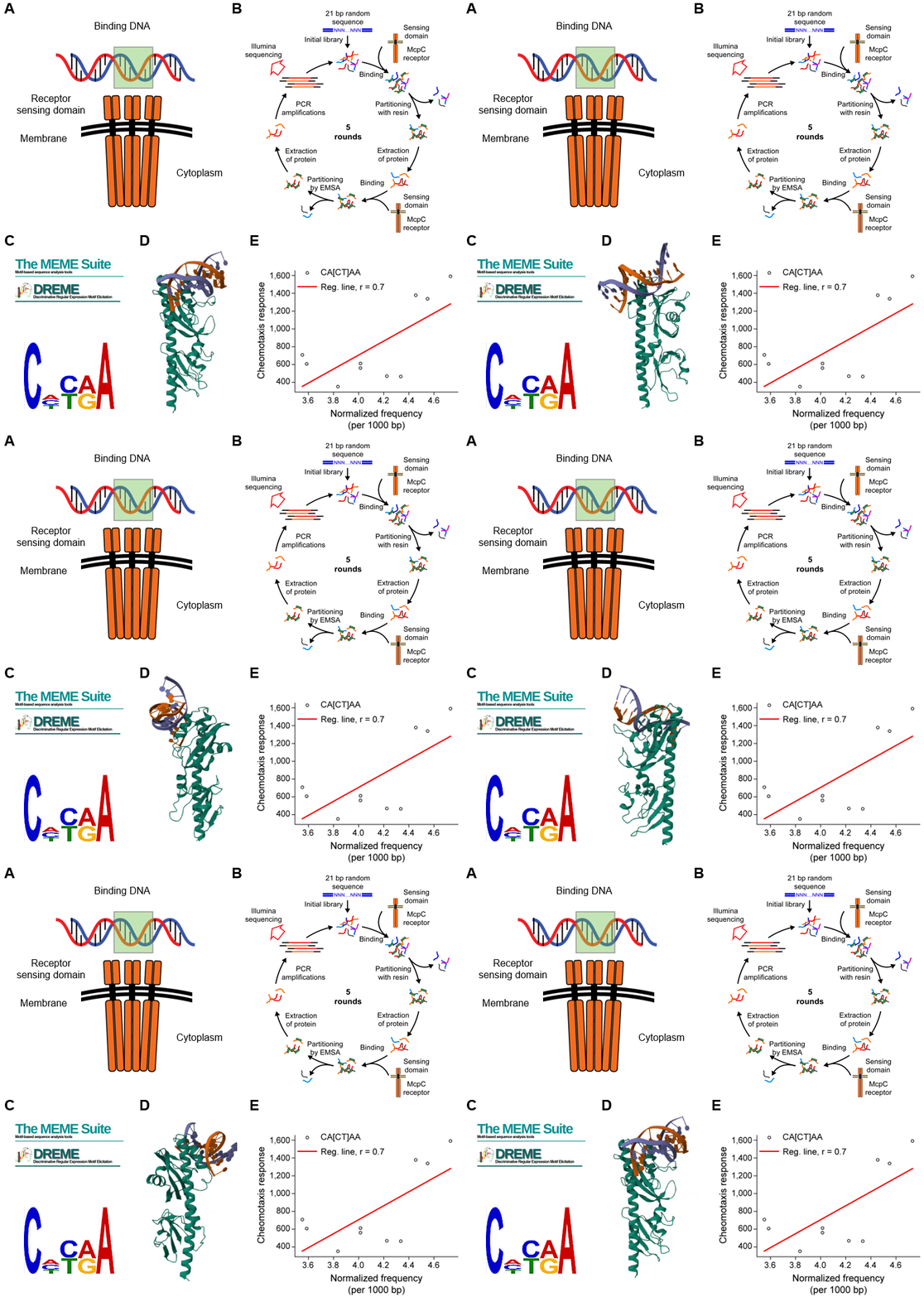
(A) Model for DNA-sensing. (B) SELEX-seq enriched for receptor-binding DNA sequences. (C) Motif discovery analysis identified DNA motifs. (D) Animation of docked receptor sensing domain with its cognate DNA ligand. (E) Chemotaxis response to DNA correlates with motif abundance in tested bacterial genomes. -
This project also grew out of troubleshooting another project: following up on those observations, we found that Bacillus subtilis chemotaxes toward alcohols. Most chemoreceptors sense their ligand through an extracellular domain, but we found that ethanol sensing in B. subtilis instead relies on two unconventional, cytoplasmic sensors. McpB, a transmembrane receptor, binds ethanol not at its extracellular domain but within its cytoplasmic signaling domain; through protein engineering and site-directed mutagenesis, we identified a single residue, Ala431, whose mutation to serine disrupts alcohol taxis, and molecular dynamics simulations showed that this substitution tightens coiled-coil packing in the signaling domain, closing off the intermonomer pocket where ethanol binds between the helices. HemAT, the main oxygen receptor, senses ethanol by an entirely different route, through its myoglobin-like domain, independent of its heme group. Since ethanol is neither metabolized nor beneficial to B. subtilis, these mechanisms likely evolved to help the cell locate alcohol-producing prey, and together they reveal that a chemoreceptor's sensory repertoire can extend well beyond its canonical sensing domain.
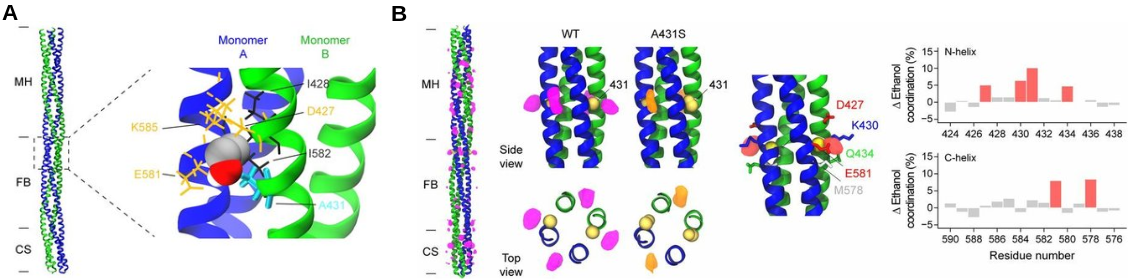
Alcohols are directly sensed by the cytoplasmic signaling domain of McpB. (A) McpB cytoplasmic residues that interact with alcohols. (B) MD simulations of WT vs. A431S reveal reduced ethanol occupancy at the binding residues. 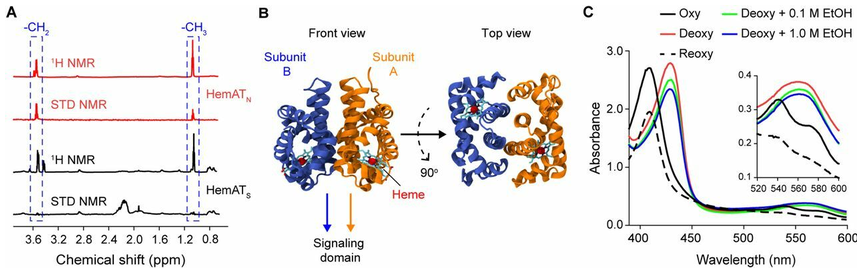
Ethanol directly binds within the helices of the HemAT sensing domain confirmed with NMR and UV spectroscopy. -
The Mechanism of Bidirectional pH Sensing in Bacteria
This project began as a side observation while I was troubleshooting a separate project on DNA sensing in Bacillus subtilis during my PhD. Following up on that lead, we found that cells repond to bidirectional pH gradients, and traced the response to four transmembrane chemoreceptors: McpA and TlpA drive migration away from acidic environments, while McpB and TlpB do the same for alkaline ones, together steering cells toward neutral pH. Using structural modeling and protein engineering, we built chimeras between McpA and TlpB, the principal acid- and base-sensing receptors, to map the determinants of pH specificity down to four residues, and found that swapping just these residues was enough to invert each receptor's response, turning the acid sensor into a base sensor and vice versa. Combining this protein engineering with comprehensive bioinformatics analysis across bacterial genomes, we proposed a general model for how bacteria sense environmental pH.
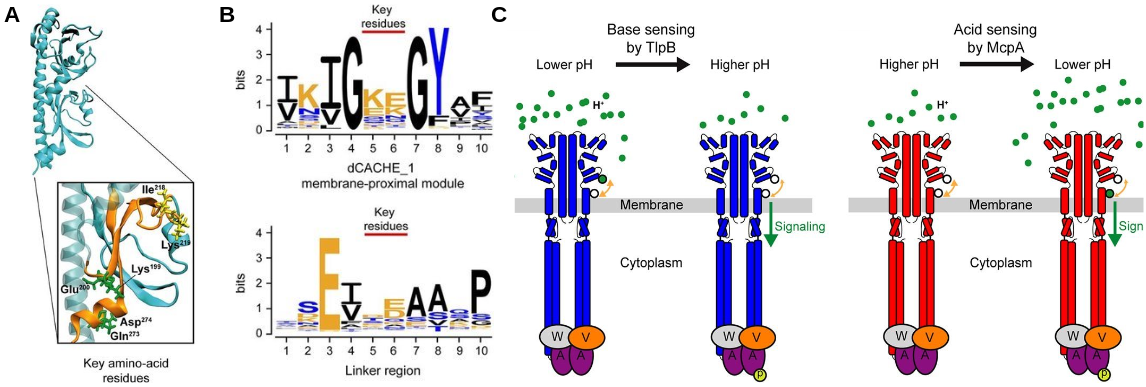
(A) Key residues involved in sensing environmental pH. (B) Conservation of pH-sensing amino acid residues in dCACHE_1 domains across bacteria. (C) Model for pH sensing mechanism in B. subtilis. -
A Modular Computational Framework for Multi-Scale Simulation of Chemotaxis in Complex Environments
Chemotaxis has long served as a model system for signal transduction in both bacteria and eukaryotes. Existing chemotaxis models typically capture either intracellular signaling dynamics or population-level behavior of swimming/migrating cells in chemical gradients, rarely both. We built a modular, multi-scale computational framework that bridges the two using a hybrid-continuum, particle-in-cell approach: individual cells integrate their own intracellular pathway dynamics, their aggregate effects are interpolated onto a stationary mesh, macroscale chemical fields are updated, and the results are interpolated back to each cell. Spatio-temporal chemical field evolution in 2D/3D space is solved using finite element method via the FEniCS C++ API, and intracellular signaling and cell motion dynamics are solved using a custom-built C++ library. Validated against experimental bacterial chemotaxis and pattern formation data with quantitative agreement, the framework can generalize to any cell population interacting through chemical signaling.
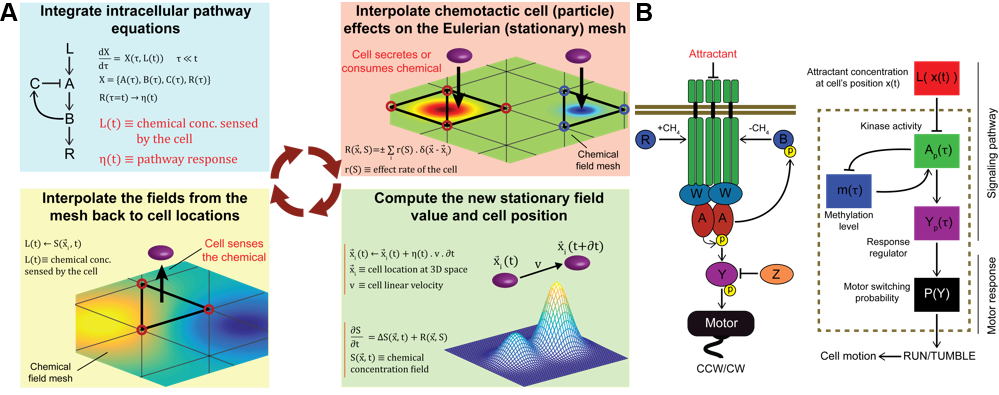
(A) Hybrid-continuum Particle-in-Cell algorithm. (B) Schematic of E. coli's chemotaxis signal transduction pathway. 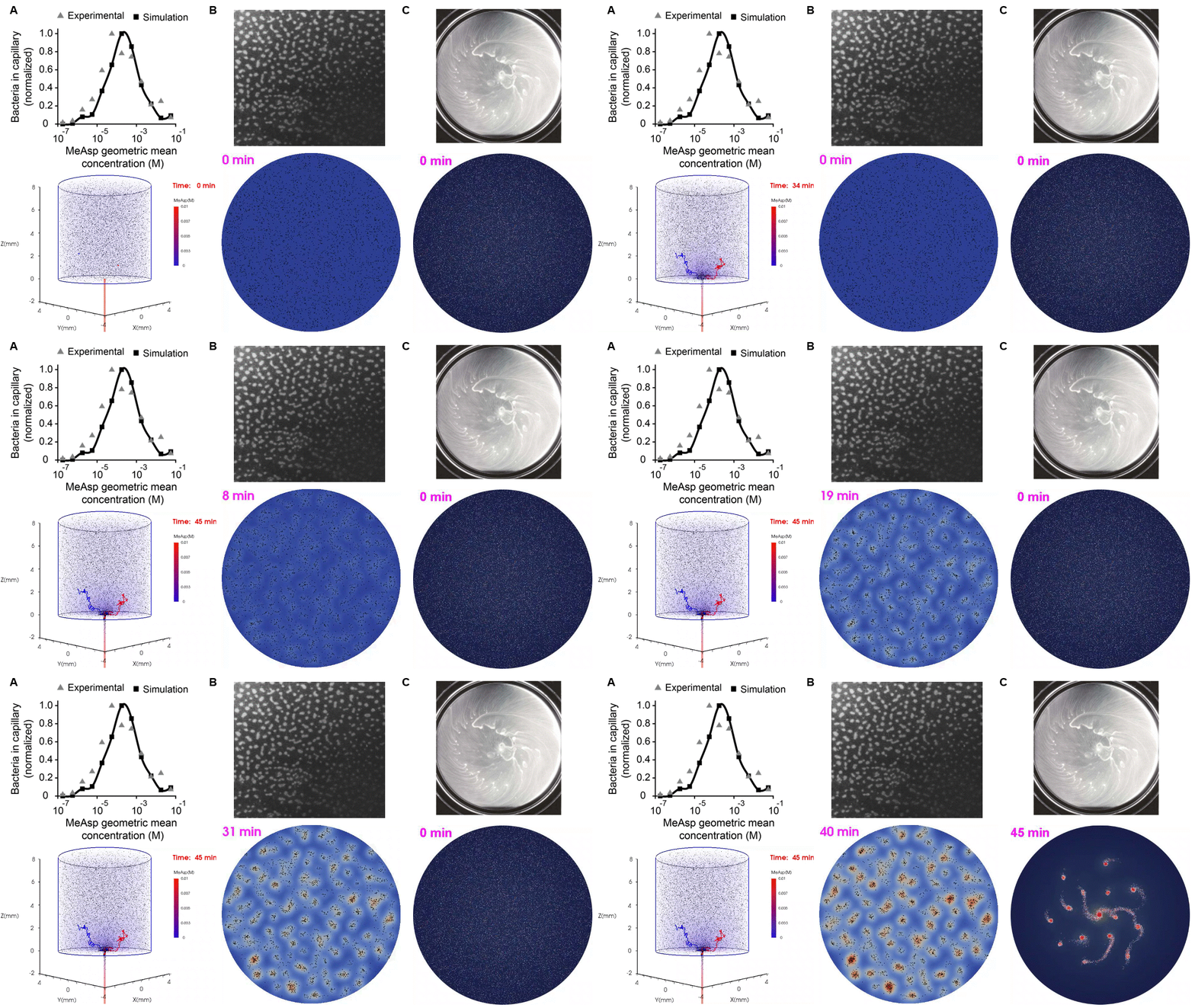
Simulation results are in good agreement with experimental data: (A) 3D simulation of individual E. coli cells swimming up attractant gradient into the capillary tube. (B) Discrete aggregates formed by Salmonella enterica in liquid media. (C) Spiral patterns formed by Proteus mirabilis in soft-agar media.